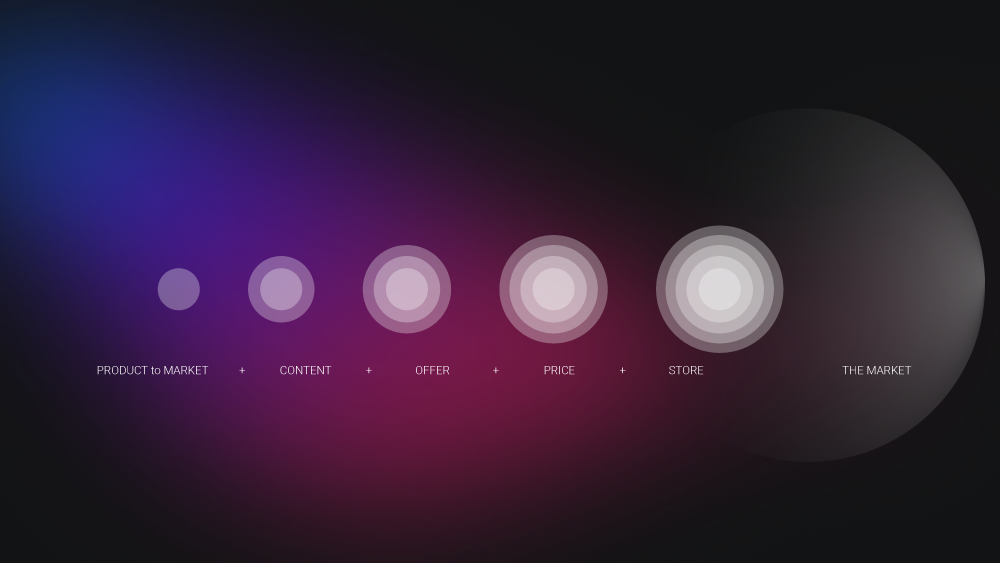
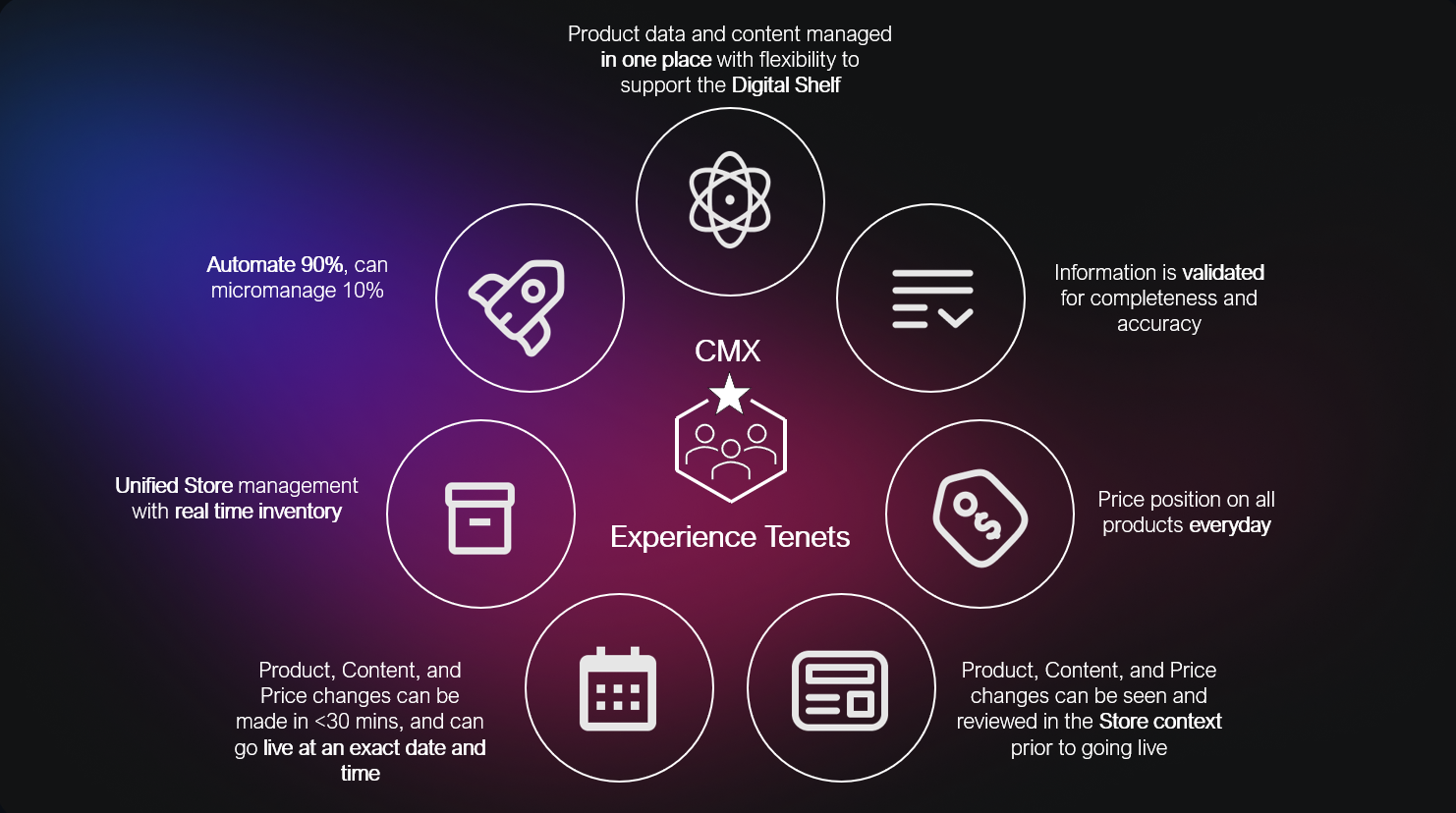
An end-to-end commerce management experience that achieves successful business outcomes and customer experiences across all product types, offers, content, price, routes-to-market, and business models. Prioritizing, designing, creating and maintaining new experiences will be efficient, value-oriented and human-centered.
Designing, developing and delivering new capabilities and experiences on Dell channels takes too long and costs too much.
Simplified end-to-end commerce management experience to achieve business outcomes, and customer experiences across all product types, routes-to-market, and business models.
Prioritizing, designing, creating and maintaining new experiences.
Efficient, unified team member experiences based on user roles and permissions.
Industry-standard, sustainable technology platforms that can be leveraged by team members & customers to execute lean, reusable solutions & anticipate rapid changes.
CMX End to End Environment
Commerce Management Experience is tasked with providing a simplified commerce management experience by empowering cross-functional people, processes and systems to make decisive progress by optimizing the process of prioritizing, designing, creating, & maintaining capabilities and experiences
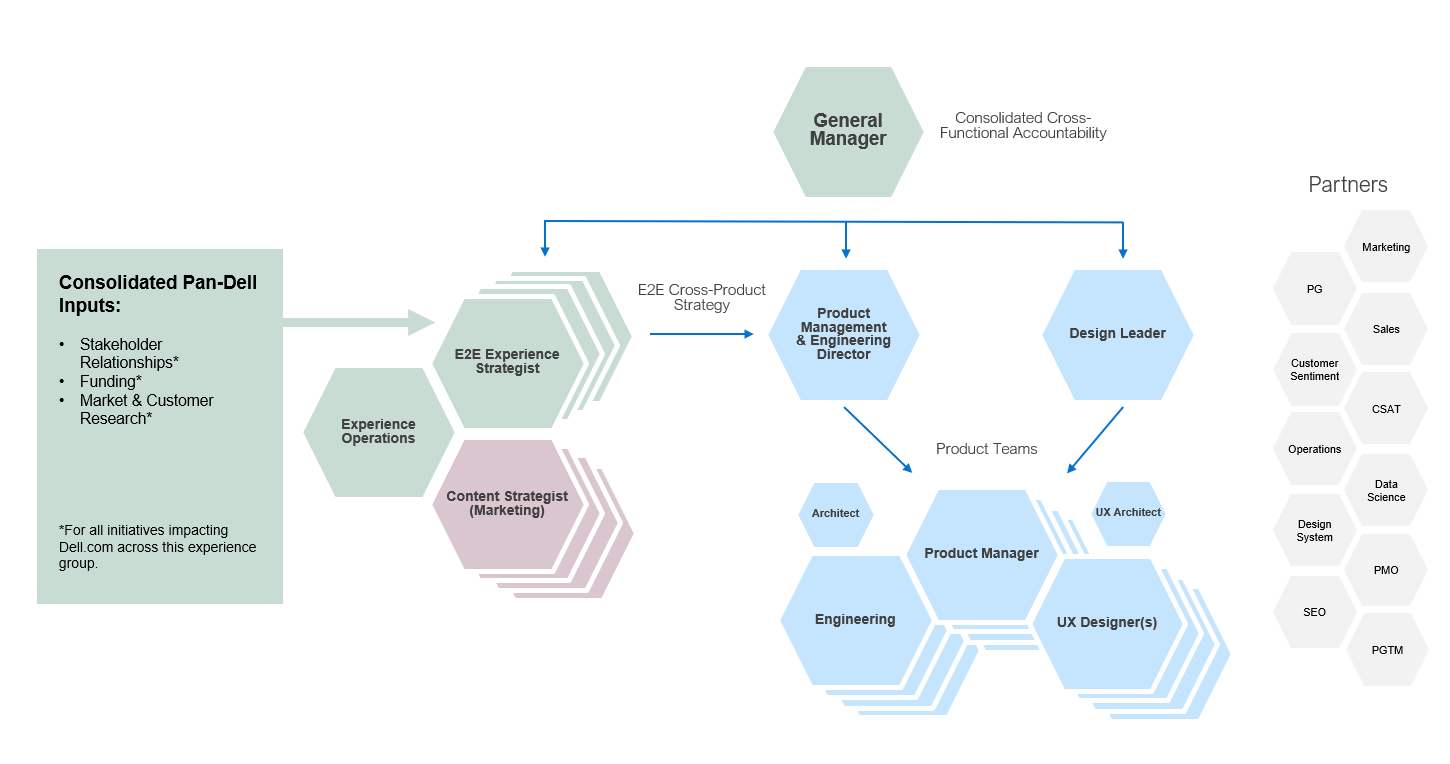
Pod Structure
To position Dell as a leader in the AI-driven future, we recommend a unified engagement model that delivers a best-in-class experience for internal and external stakeholders. DTX, IT, Marketing, and DCX will operate as a single, integrated framework—ensuring every interaction reflects Dell’s brand promise and meets the highest industry standards.
Faster Delivery: By integrating roles and automating processes with AI, pods can accelerate project timelines and deliver value more quickly.
Increased Efficiency & Quality: Self-contained teams and the "we build it, we own it" mindset reduce time-consuming handoffs and improve overall quality and accountability.
Enhanced Adaptability: The small, cross-functional structure makes teams highly adaptable to changing requirements and market needs.
Improved Collaboration: Breaking down silos fosters a collaborative environment where all team members contribute to the entire product journey.
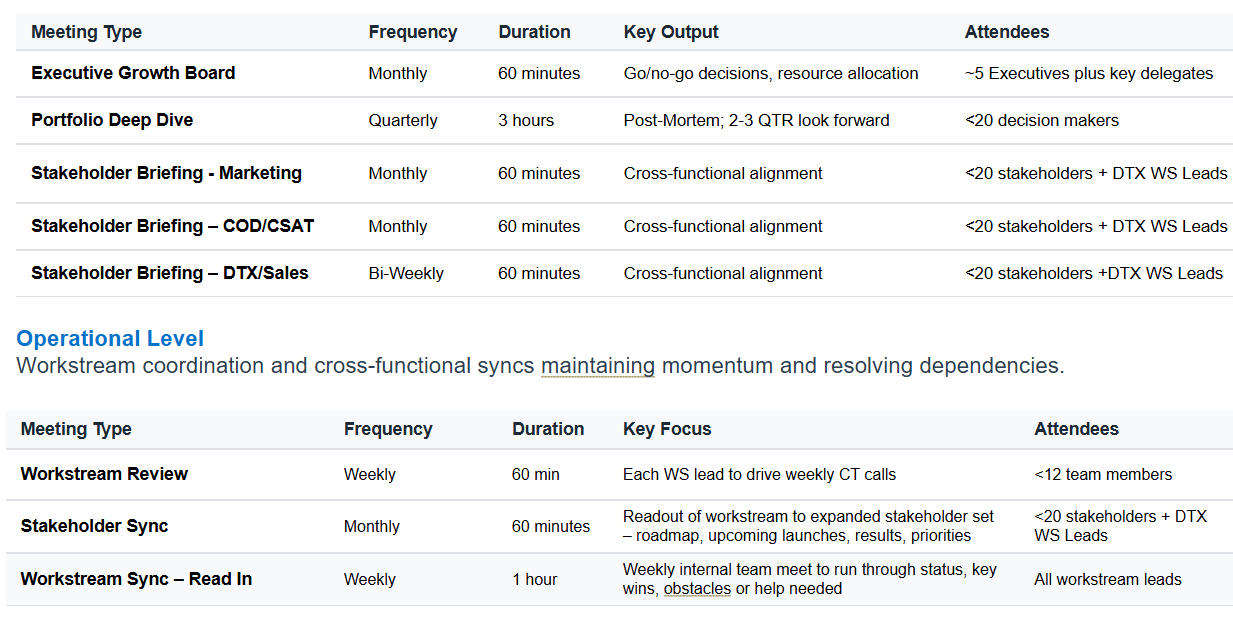
Unified Business Management System
Executive oversight and portfolio governance focused on long-term value creation and strategic alignment.
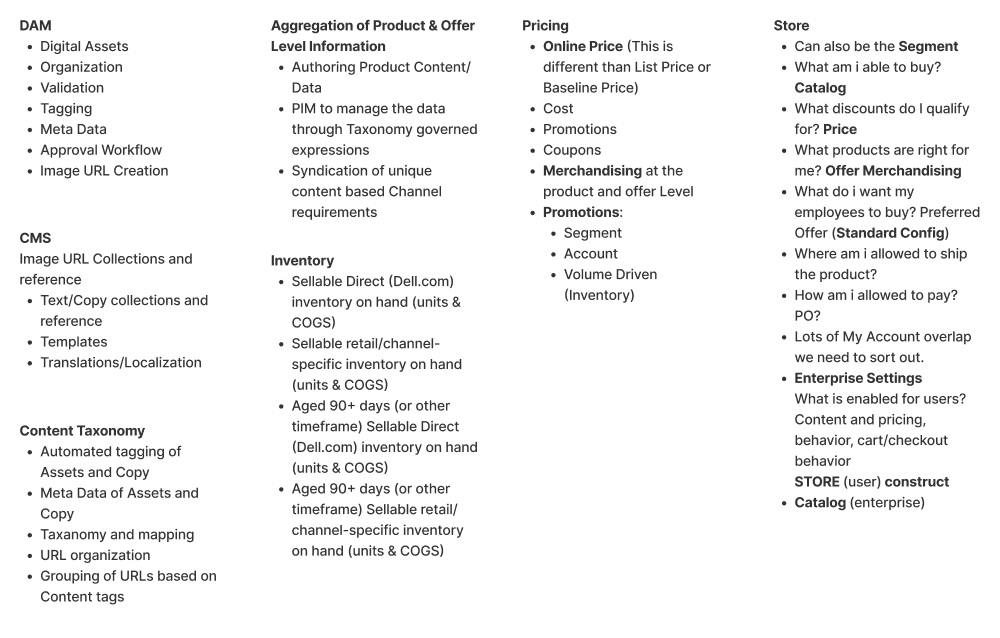
Content
Objective: Create a unified E2E content management framework to enables faster, lower-cost delivery of high-value content.
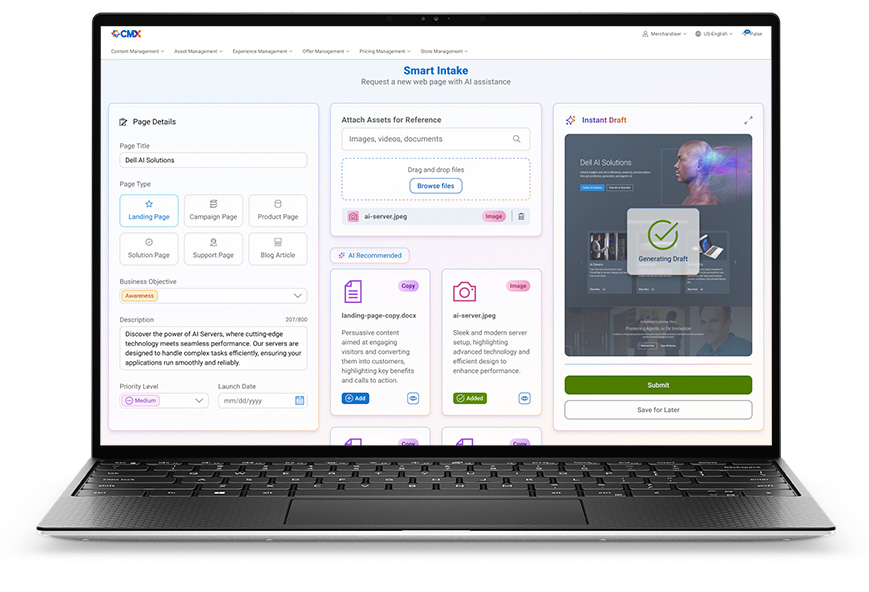
Content Creator Concept
Offer
Objective: Establish an offer journey including all information & assets that live on any page with an “Add to Cart” button, including (but not exclusive to) images, videos, enhanced content, tech specs & other marketing content.
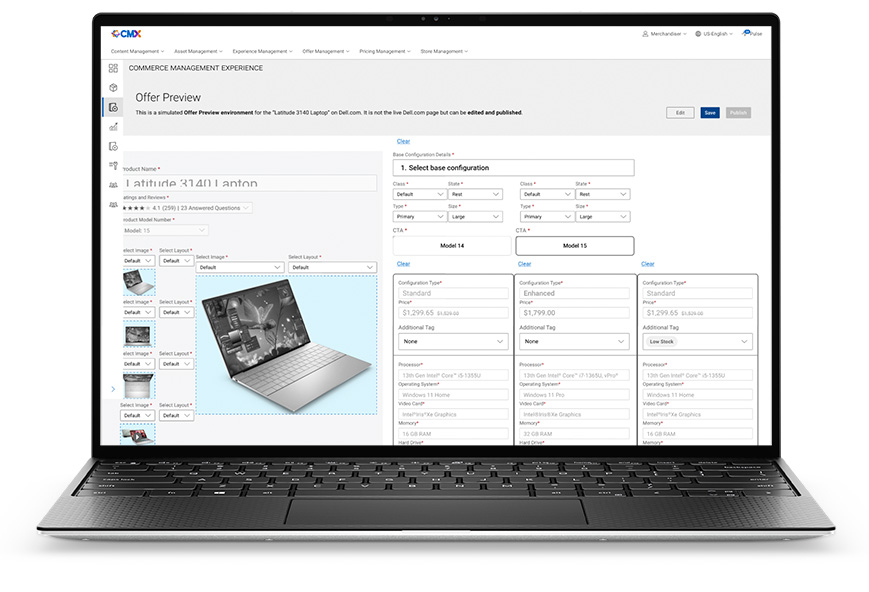
Offer Management Concept
Price
Objective: Establish Dell.com (and Premier) as a leader in delivering consistent, reliable, market-competitive pricing on all products every day to drive sustainable growth, build loyalty and trust, and ensure our customers receive the best value for the solutions they buy.
PromoLite 2.0 Concept
Store
Objective: Create an industry-leading, simple, intuitive, and secure Store (environment) that facilitates a frictionless and personalized experience for customers/partners, and empowers Dell to efficiently manage commerce operations and settings for all commerce channels.
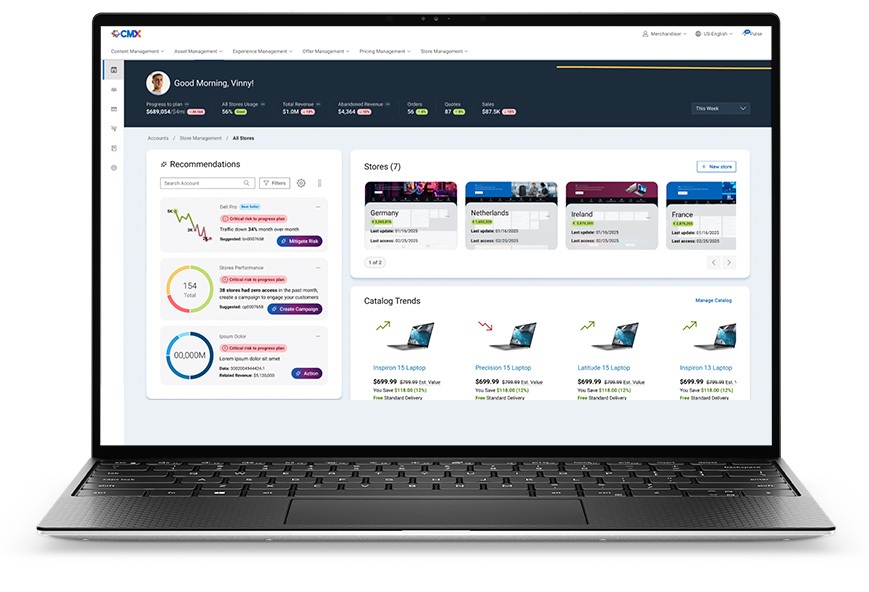
Store Management Concept
Current User Pain Points
Based off of constant, ongoing user feedback and interviews along the entire program.
Product data optimized for supply chain
Multiple pricing teams working within complex ecosystem to preserve offline margin vs. online demand and CX
Supply chain and inventory optimized for manufacturing
Distribute ownership of online content and management
No standardized template for offer creation
Limited automation creating manual effort
Business Tenets
Design Tenets
A standard that all solutions will include:
Inclusive language
Accessibility
Readability
Spelling and grammar
Cognitive load optimization
Prioritized and clear action
Alignment with vision
Embedded capabilities where and when users need and want them in single access points
All experiences are personalized based on established roles and process governance enabled by RBAC
DDS is a guideline but not a requirement for internal tools and can be customized where needed. Customer facing should not be customized
Any “AI” capability is embedded; not a destination or project
Workflow management platforms are used to track and report on workflows and embedded in the tools and solutions we provide.
Decision makers assign tasks, conduct reviews and approvals
Program Objectives and Key Results
Objectives
Key Results
Define and Deliver an industry standard Commerce Platform to deliver Modern Commerce Capabilities across Content, Offer, Price, and Store. X% of target capabilities to Y% of target Capabilities delivered by FY28 end.
1. Revenue gained (annualized)
2. Operational hours saved (annualized)
3. Platform Capability Index – Data & Insights from Accenture, McKinsey, Deloitte
4. Future Ready Content Ratio
5. Tool & App rationalization across routes to market.
6. Business Self Service & Frictionless Ratio
100% of Process and Operational support requirements defined and documented aligned to Modernization 2.0 Milestones.
1. Test Readiness of NewCo Platform & Process
2. Business Self Service & Frictionless Ratio
3. Ops Metrics: TAT, SLA, MTTR, RU
Leveraging AI/ML to enable our business partners to generate incremental revenue of $93.5M/ margin of $14.9M by FY27 end.
1. Rev, Units, & Margin, RPV, Cost Reduction
2. Agent Adoption
Provide transparent and factual view of benefits and limitations of modernization. Keep 100% of critical business capabilities supported through modernization milestones
1. Predictable & Factual stakeholder understanding of changes
2. Impact Sizing of Critical Business Capabilities
CMX Shell Concept
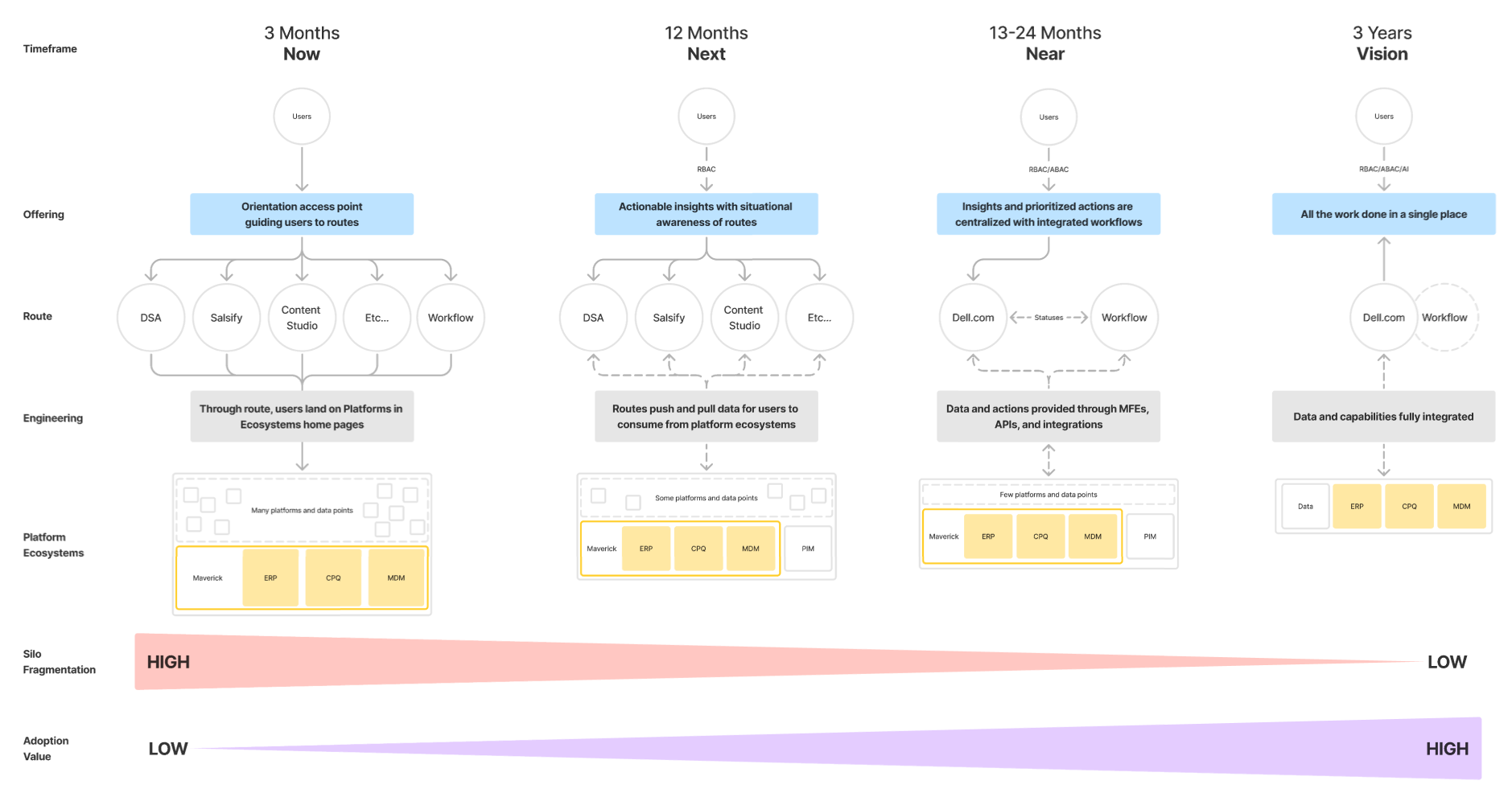
A centralized system and platform designed to manage, automate, and streamline workflows across all COPS processes for all GTM. A central point where various tasks, activities, and workflows for CMX are coordinated, integrating multiple systems and tools to build a robust shell.
CMX Shell
Then the real "Modernization" started...
An end to end transformation that touches all processes across the entire lifecycle of the company, the Project's mission is to simplify and modernize the company's complex IT sprawl, a step that's seen as "critical" for Dell's AI strategy and future success. Today it is costly and takes an army of people to maintain at a basic level leaving little to innovate with.
Modernization Tenets (paraphrased)
A partnership struck between Dell and someone, another big tech company
Streamline inside out our operations including technology, process, and people
Modernize instead of customize for legacy
To increase speed and agility
"We are replacing like two plus decades of tools and processes in about two years. I have no reference for how long this would take in another similarly sized company, but even when pushing the launch back a quarter, it seems like we are doing pretty well," - anonymous, Business Insider
Challenges Caused by Modernization
Parallel tracks of disconnected work
IT and architecture first approach due to timelines and top down partnerships
A disconnect from user-centered strategy
User value will be considered later
Misalignment between business/user needs and IT
No defined process of engagement (See POD Model) due to extreme tight timelines
Unrealistic and shifting timelines
Shifting and shrinking resources
Users and roles changing at same time
The real benefit is all product information on a single platform, in one place.
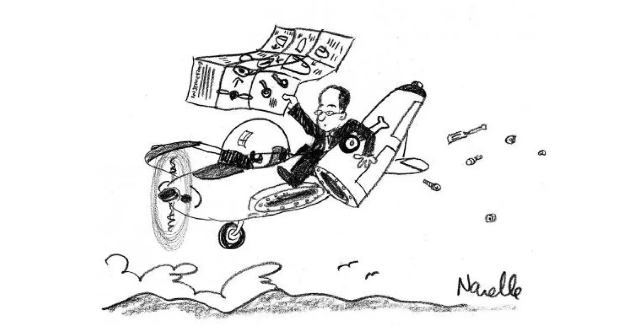
Changing people, process, and technology at the same time is like flying a plane as you rebuild it...while learning how to be a pilot and figuring out how to run an airline company at the same time.
What Now?
Key turnarounds and realignments
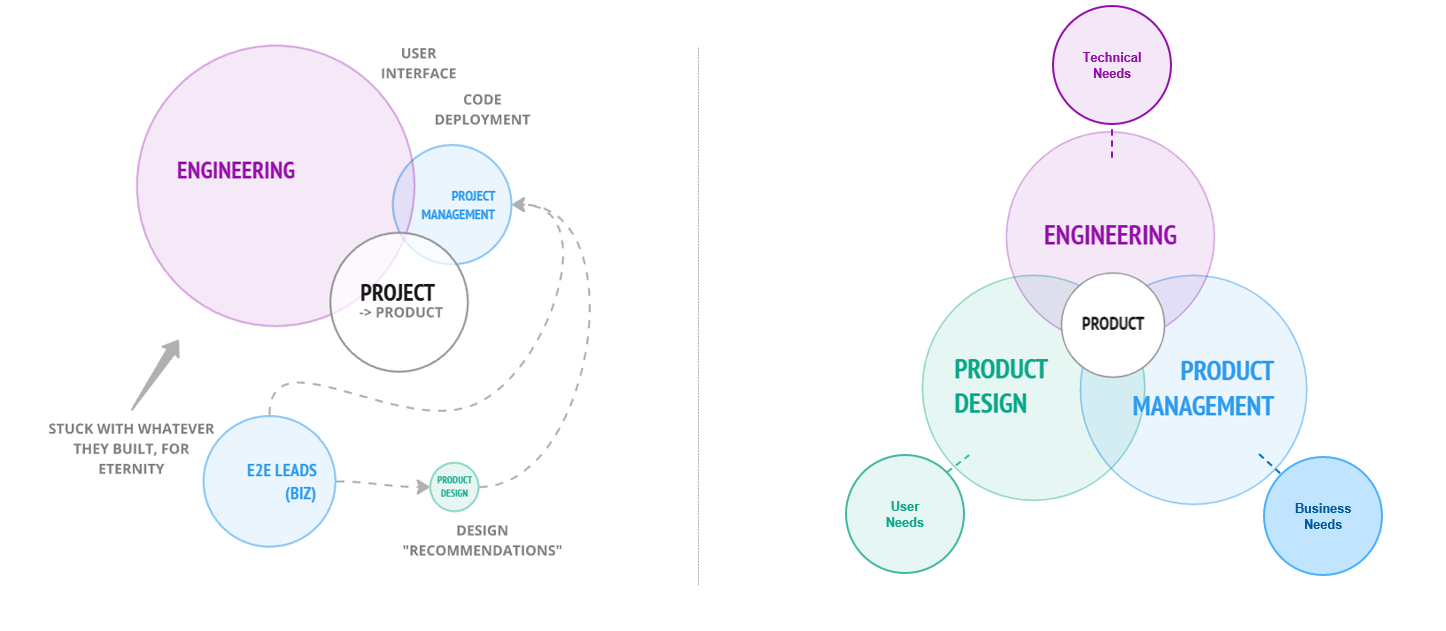
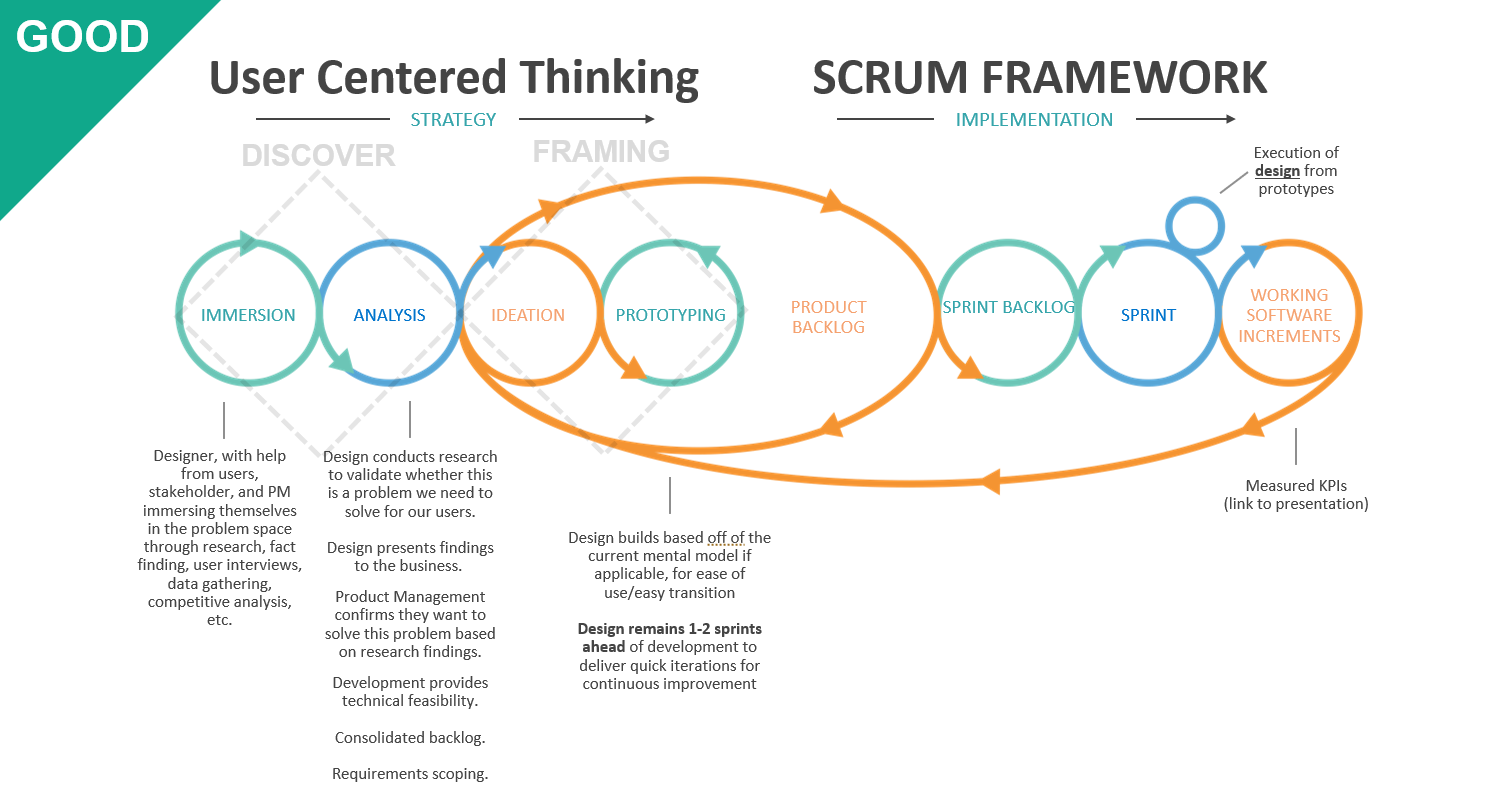
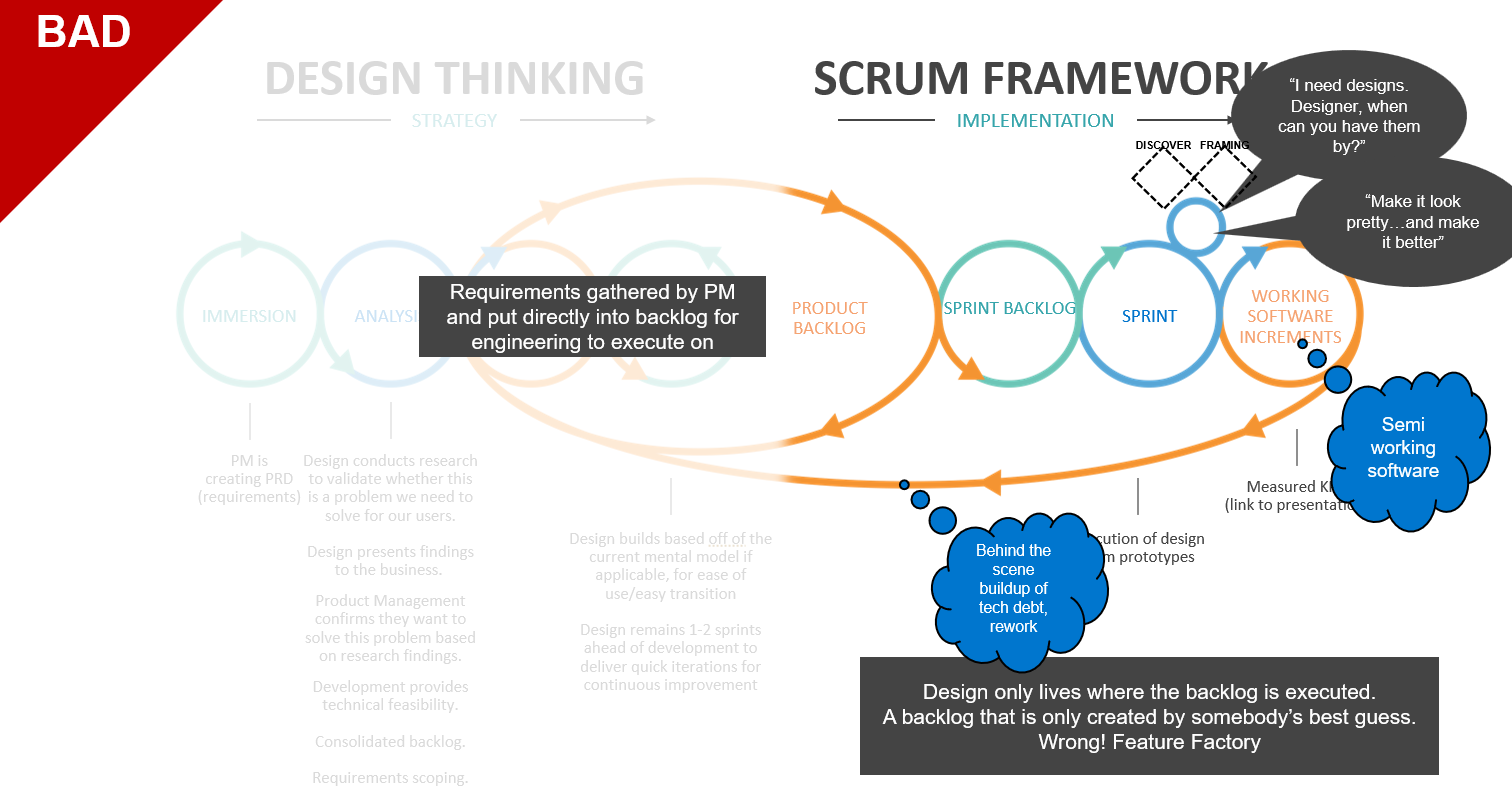
Resetting the team to execute and help accelerate to launch. Reintroduce design back into the product team backlog.
Bringing back balanced teams
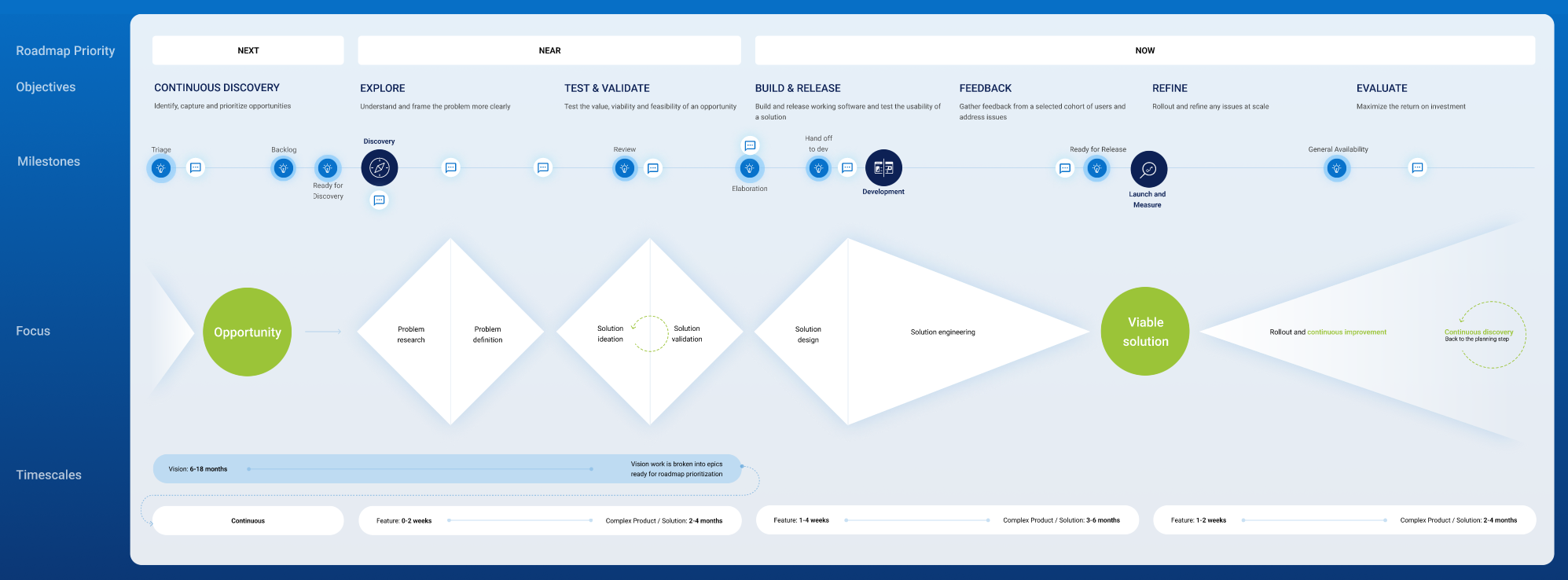
Reintroduce a user-centered process that drives the backlog instead of reactive design being driven by IT priorities.
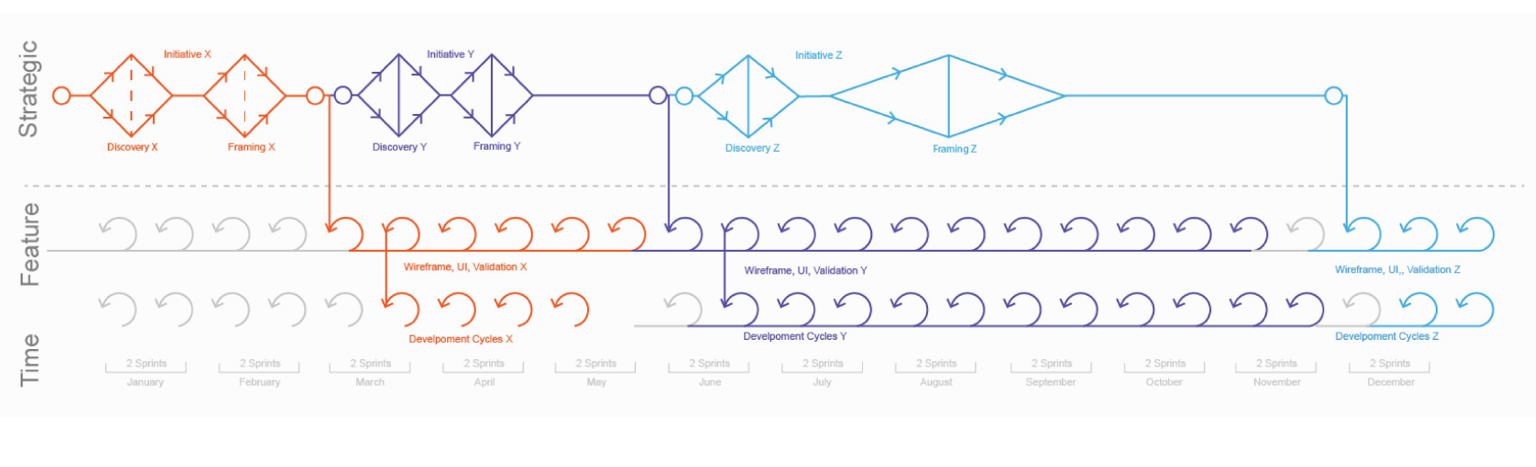
User Centered Thinking and Scrum Framework
Understanding New Users and Processes
Roles and responsibilies have changed to adapt to new ERP systems. Less people = move faster
New Users are formed after technology deployed
Start with UX expertise, then to user inclusion, then to user centric methods and validation testing
Observing their behaviors and conduct Heuristic analysis
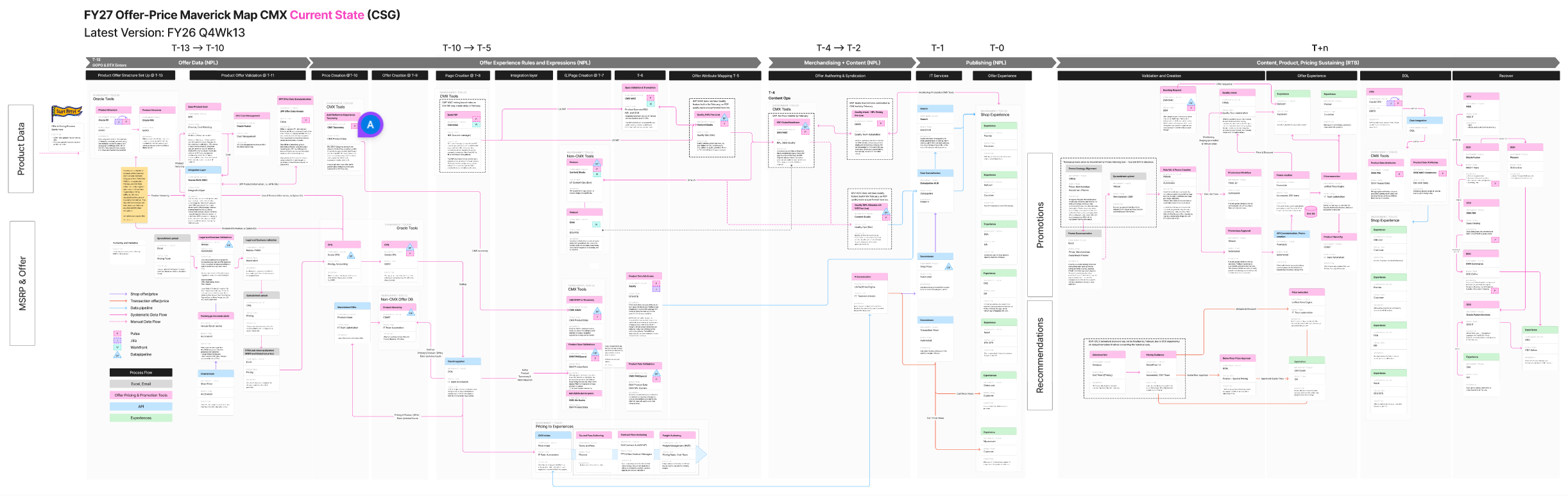
Identifying new processes associated with new systems
New Process Maps
Co-development of new process for iterative improvements
Ongoing Challenges and What's Next
Executive and organizational alignments still needed. Empire hugging still exists
Test environment is currently being used as staging for NewCo Launch
Workshops coming soon to define vision and identify skills and resources needed